No Deal, No Problem: The Real Money Math Behind Rock's Most Uncompromising Acts
Forget the myth that says you have to choose between artistic integrity and paying the rent. That story — the one where the only path to sustainability runs straight through a major label deal and a radio-friendly single — has been quietly dismantled over the last two decades by a whole ecosystem of bands that nobody asked to be palatable.
These acts are loud, weird, uncommercial, and occasionally terrifying. They're also, somehow, still here. Touring. Recording. Building something that actually lasts. So how does that math work?
The Touring Engine Is Still Running
Live performance remains the single most reliable revenue stream for independent rock acts in the US, and the bands that understand this treat their tour schedule like a business plan rather than an afterthought. The key distinction between bands that survive and bands that don't usually isn't the size of the venues — it's the efficiency of the operation.
Small-to-mid-level rock acts that consistently move 200 to 800 tickets per night in secondary markets — think Omaha, Albuquerque, Richmond, Boise — can build a genuinely sustainable touring economy if they keep overhead tight. That means a lean crew, a van or a small bus, and a booking strategy that prioritizes routing efficiency over prestige. Playing Nashville is great. Playing Nashville on the way between St. Louis and Atlanta is a business decision.
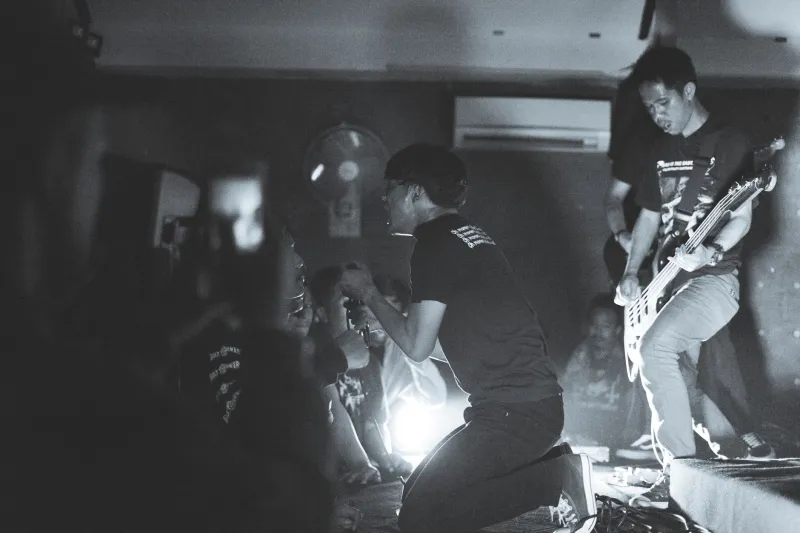
The bands that stay dangerous on the road are usually the ones who've stopped romanticizing the grind and started treating it like a craft. Load in. Sound check. Play like your life depends on it. Load out. Drive. Repeat.
Merchandise as a Margin Business
Here's something the music industry doesn't say loudly enough: for independent rock acts, merchandise isn't a bonus revenue stream. It's often the revenue stream. A well-designed, limited-run piece of merch sold at the table after a blistering set can generate more income in a single night than the door split from ticket sales.
The bands that do this well treat their visual identity with the same seriousness as their music. Every shirt, every patch, every poster is an extension of the aesthetic — it communicates something about what the band stands for, and that meaning is what people are actually buying. Fans don't just want a shirt. They want a flag. They want something they can wear that says I was there, I'm one of these people, this thing means something to me.
Limited runs create urgency. Unique designs for specific cities or specific tours create collectability. And bands that collaborate with underground artists and illustrators on their visual output create something that feels genuinely worth owning.
The Direct-to-Fan Revolution Wasn't a Trend
When Bandcamp launched and Patreon started gaining traction in the music world, a lot of industry observers treated it like a temporary workaround — a stopgap until the real money came back. That was wrong. For independent rock acts operating outside the mainstream, direct-to-fan economics have become the structural backbone of a viable career.
The logic is simple and powerful: 1,000 fans paying $10 a month for exclusive content, early access, and a sense of genuine connection to a band they love is worth more than 100,000 passive Spotify streams. The revenue is predictable, the relationship is direct, and — critically — the band doesn't have to compromise a single note to maintain it.
Bands like Clutch have demonstrated this model at scale for years, building a devoted American fanbase through relentless touring and a direct relationship with their audience that bypasses traditional gatekeepers entirely. They don't need a hit single. They have something better: a community.
Owning the Catalog Changes Everything
One of the most consequential financial decisions an independent rock act can make is retaining ownership of their recordings. This sounds obvious, but the pressure to sign deals that include catalog ownership transfers is enormous, especially for younger bands who need upfront capital to record and tour.
The math on catalog ownership compounds over time. A band that owns its masters can license music for film, TV, and advertising on its own terms — and in the current market, sync licensing is one of the most lucrative revenue streams available to independent artists. A single well-placed song in a Netflix series or a video game can generate more income than a year of streaming.
More importantly, owning the catalog means the band controls who hears their music and in what context. For acts that have built their identity around a specific dark or aggressive aesthetic, this matters. Nobody wants to hear their most vicious song soundtracking a fast food commercial.
The Refusal to Compromise Is Actually a Niche Strategy
Here's the counterintuitive heart of all of this: staying uncompromising isn't just an artistic choice. It's a market positioning decision. In a landscape flooded with music that sounds like it was designed by committee to offend nobody, a band with a genuinely distinctive and uncompromising identity has a competitive advantage.
There are real American music fans — a lot of them — who are actively hungry for something that doesn't apologize for being what it is. Those fans are loyal in a way that casual listeners never will be. They travel for shows. They buy the limited-edition vinyl. They evangelize to their friends. They're the kind of audience that sustains a career for twenty years without a single mainstream hit.
The bands that figure this out stop thinking of their refusal to compromise as a sacrifice. It's a strategy. And it's working.