Small Crowd, Loud Faith: Why Rock's Most Devoted Fans Come From Bands That Never Tried to Win Them Over

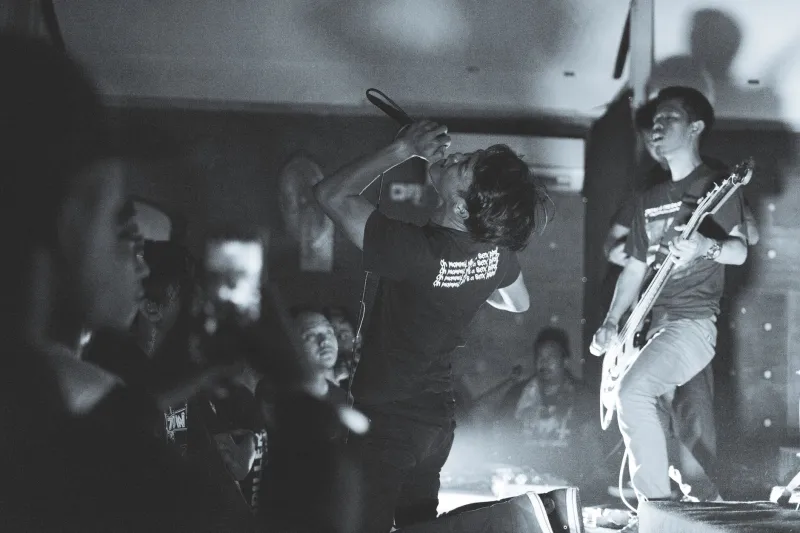
There's a specific feeling you get at a show where the band has never had a radio hit and never tried to get one. The room is smaller than it should be for how good the music is. Everyone there found the band through some weird chain of recommendations — a friend's mix CD, a random YouTube rabbit hole, a show they almost skipped. And the energy in that room is unlike anything you'll find at an arena.
That's not a coincidence. That's a community that was built through friction rather than convenience, and friction, it turns out, is the most durable binding agent in rock 'n' roll.
The Casual Listener Problem
Here's something nobody in the music industry likes to say out loud: casual listeners are a liability. They spike your streaming numbers and then disappear. They buy a ticket because they heard one song on a playlist and leave after the set if the opening act runs long. They can't tell you the name of the drummer. They don't argue on Reddit about which album is the most underrated. They don't drive four hours to a show in a city they've never been to.
Devoted fans do all of those things. And devoted fans are almost always built through difficulty — through music that didn't immediately give you everything you wanted, through an aesthetic that took some getting used to, through a band that clearly did not care whether you were comfortable or not.
The question is whether that's something you can do on purpose, or whether it just happens to bands stubborn enough to stay weird.
The Gatekeeping Paradox
The word "gatekeeping" has taken on a negative connotation in fan culture discourse, and fair enough — there's a version of it that's just elitism dressed up as taste. But there's another version that's actually about the artist rather than the fan, and it operates completely differently.
When a band refuses to simplify their sound for radio, when they play forty-five-minute songs without apology, when they release albums with no singles and no obvious entry points, they're not trying to keep people out. They're just being exactly what they are. The gatekeeping is incidental. And what it produces, almost without exception, is a fanbase that came in through the hard door and feels a deep ownership over what they found.
Tool is the textbook example. Their catalog is dense, demanding, and deliberately inaccessible to anyone looking for a quick hit. Their most devoted fans don't just love the band — they study the band. They have opinions about drum production choices on Undertow. They've argued about the Fibonacci sequence in the song structures. You don't get that level of engagement from a band that's trying to be liked.
Touring the Cult Circuit
From a tour life perspective, this dynamic plays out in a way that's immediately visible to anyone who's spent time on the road. The cult band plays the same mid-size venues year after year — not because they can't grow, but because their audience is concentrated rather than distributed. You get three hundred people in Chicago who have seen the band eleven times, rather than three thousand who saw the ad on Instagram.
That's a different kind of show. The audience already knows the deep cuts. They're not waiting for the hit — they're waiting to see what the band does with the song they've been listening to alone in their car at 2 a.m. for the past four years. The emotional stakes are higher. The connection is more specific.
Bands like Failure, Hum, and Unwound built careers on exactly this model — never quite breaking through to the mainstream, never really trying to, and building rooms full of people who would follow them anywhere. When Hum reunited and released Inlet in 2020 after twenty-two years, they didn't need a press campaign. Their audience had been waiting, and they showed up.
The Economics Actually Work
Here's the part that surprises people: the cult fanbase model is increasingly viable in ways it wasn't in the major label era. When your revenue depended on album sales and radio play, you needed mass appeal to survive. The math was brutal for niche artists.
Streaming changed some of that math, and direct-to-fan platforms changed more of it. A band with fifty thousand deeply committed fans who buy merch, attend every show in their region, and subscribe to a Patreon can generate real revenue. They don't need fifty million streams — they need a few thousand people who are genuinely invested.
The cult model also protects against the volatility of trend cycles. Mainstream success is tied to what's culturally relevant in a given moment. Cult success is tied to something more durable: identity. People don't stop loving the band that soundtracked their most formative years because that band fell off a playlist algorithm.
The Villain Advantage
At Vincent Vincent & The Villains, we think about this a lot. The villain archetype — the one who doesn't ask for your approval, who operates outside the rules, who builds their world on their own terms — is exactly the archetype that creates cult fanbases. You don't root for the villain because they're trying to win you over. You root for them because they're not trying at all, and something about that is magnetic.
The bands that built the loudest, most devoted rooms in America weren't the ones who played the game perfectly. They were the ones who played their own game, in their own key, at their own tempo, and let the right people find them.
The right people always find them eventually. And when they do, they never leave.