Asphalt, Ramen, and Rock 'n' Roll: The Real Story of Touring America in a Van
Asphalt, Ramen, and Rock 'n' Roll: The Real Story of Touring America in a Van
Somewhere around Amarillo, Texas — it's 2 a.m., the van is making a noise it wasn't making yesterday, and there are five more hours to Phoenix — you get a very clear sense of why most people don't do this.
And then you remember last night's show. The way the crowd in Oklahoma City went absolutely sideways during the third song. The bartender who bought the band a round after the set. The kid who waited by the merch table for forty-five minutes just to tell you that one of your songs got him through something genuinely hard.
And you think: yeah, okay. Five more hours. Let's go.
This is what independent rock touring in America actually looks like. Not the tour bus fantasy. The real thing.
Loading In at 4 PM, Playing at 10, Gone by Midnight
The rhythm of a touring day is its own kind of discipline. You're typically rolling into a new city mid-afternoon, hunting for the venue's loading dock, hauling your own gear up stairs that seem specifically designed to destroy lower backs, and doing a soundcheck in an empty room while the sound guy explains — for the third time this week, at the third different venue — that the monitors "have a little quirk."
You eat wherever is cheap and close. Chipotle if you're lucky. Gas station if you're not. You've had this exact conversation with your bandmates about whether to try the local taco spot or just grab something fast, and you will have it again tomorrow in a different city with a different set of options.
By the time doors open, you've been up for fourteen hours and you've got maybe ninety minutes before you need to be ready to perform like you're the most electrifying thing that's ever happened to this particular room.
Here's the secret: sometimes you actually are.
The Van Is Your Office, Your Living Room, and Your Therapist
Independent bands don't do tour buses. They do vans — usually a Ford Transit or a Chevy Express with somewhere between 150,000 and 200,000 miles on it, a busted aux cord port, and a persistent smell that defies identification.
The van is where everything happens. Setlist arguments. Song ideas that get hummed into a phone voice memo at 70 mph somewhere on I-44. The kind of deep, strange conversations that only happen when five people have been in close proximity for eight days straight and the social filters have fully dissolved.
You learn things about your bandmates on tour that you'd never learn any other way. Who's actually a morning person (nobody). Who stress-eats at truck stops (everyone). Who can sleep sitting up (the drummer, always the drummer).
The van is also where the breakdowns happen — mechanical and emotional. A blown tire outside of Flagstaff. A overheated engine in the Missouri summer. The occasional full-band argument that clears the air and somehow makes the next show better.
You get through it because you have to. And because the alternative is going home.
Winning Over a Room Full of Strangers
Here's what nobody tells you about building a fanbase city by city: the first time you play most towns, those people owe you absolutely nothing.
They didn't drive out to see you specifically. They showed up because it's a Friday and the bar is good and maybe a friend mentioned there's a band on. You've got maybe three songs to make them care. Three songs to convert a room full of politely indifferent strangers into people who are going to tell their friends about you on Saturday morning.
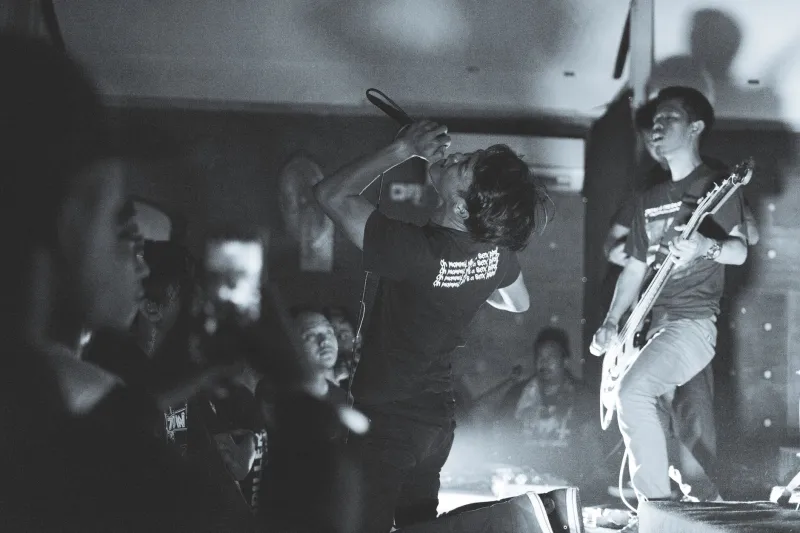
When it works, it's one of the best feelings in music. There's a specific moment — usually somewhere in the second song — where you can feel a crowd shift. The conversations die down. People start actually watching instead of just being present. Someone moves closer to the stage.
That moment is what independent touring is actually for. Not the Spotify streams (though those help). Not the Instagram posts (though those also help). That live, in-person conversion — stranger to fan — is the foundation that everything else gets built on.
Come back to that city six months later, and some of those people will be at the front of the room. They'll bring friends. That's how it grows.
The Economics of the DIY Road
Let's be real for a second about the money, because pretending it's not a factor would be dishonest.
Most independent rock bands on a US tour are operating on margins that would give a small business accountant a breakdown. Guarantees at smaller venues might cover gas and food on a good night. Merch sales — shirts, vinyl, stickers — are often the difference between breaking even and going into the red.
This is why the merch table is sacred. If you see a band you like playing a club show, buy something. Not because they're guilt-tripping you, but because that twenty dollars for a t-shirt might literally be what gets them to the next city.
The bands that figure out how to make touring financially sustainable are usually the ones who treat it like a craft — tracking what works, building relationships with promoters, and understanding that the first time through a market is an investment, not a payday.
It's a long game. The bands who stick around are the ones who understand that.
Why the DIY Spirit Is Rock's Real Lifeblood
For all the streaming numbers and algorithm-driven playlists that dominate the music conversation right now, the truth is that rock 'n' roll's actual vitality lives in these vans, these club shows, these city-by-city campaigns of musical persuasion.
The major label system isn't going to save the genre. The algorithm isn't going to capture what happens in a sweaty 300-capacity room when a band is genuinely firing on all cylinders and a crowd decides, collectively, to go completely nuts.
That's a human thing. A live thing. A you-had-to-be-there thing.
At Vincent Vincent & The Villains, we believe pretty deeply in that truth. The road is hard, the van smells weird, the monitors always have a quirk — and none of that matters when the riff lands right and the room goes electric.
See you out there.