First Note, Full Threat: 10 Opening Riffs That Hit Like a Warning Siren

There's a specific feeling you get in the half-second before a song fully arrives. The needle drops, the amp crackles, and then — before the drums even breathe — a guitar riff lands like a fist on a table. Something in your gut shifts. You don't know exactly what's coming, but you know it's going to be loud, dangerous, and absolutely worth it.
That's what the best opening riffs do. They're not just musical hooks. They're warnings. They're the villain stepping into the light before anyone else in the room realizes the game has already changed.
Here at Vincent Vincent & The Villains, we spend a lot of time thinking about exactly that kind of energy — the menace, the swagger, the moment a song announces itself as something you probably shouldn't mess with. So we put together this list of ten opening guitar lines that function less like introductions and more like ultimatums.
1. "Whole Lotta Love" — Led Zeppelin (1969)
Jimmy Page's opening salvo on this track isn't really a riff so much as a controlled explosion. That descending, distorted slide feels like something being torn apart. Before Robert Plant even opens his mouth, the guitar has already told you that whatever's about to happen, it's going to be primal and a little terrifying.
2. "Bombtrack" — Rage Against the Machine (1992)
The debut album opener announced an entire political philosophy in about four seconds of guitar. Tom Morello's riff is blunt, mechanical, and furious — like a factory machine that got angry and decided to start making demands instead of products. It's one of the rare riffs that sounds like an argument and a threat at the same time.
3. "Paranoid" — Black Sabbath (1970)
Tony Iommi had a gift for writing riffs that feel like they're chasing you down a hallway. The opening to "Paranoid" is deceptively simple — just a few notes played at a pace that keeps accelerating in your imagination even when it isn't. It doesn't lumber. It sprints. And that urgency is what makes it feel dangerous.
4. "Beat on the Brat" — The Ramones (1976)
Stripped down to almost nothing, this riff works through sheer attitude rather than complexity. Johnny Ramone plays it like he's daring you to say something. The simplicity is the point — there's no flourish, no warmup, just an immediate declaration that this song has absolutely no interest in being polite.
5. "Welcome to the Jungle" — Guns N' Roses (1987)
Slash's iconic opening crawl is practically a movie trailer compressed into a few bars. It starts slow and sinuous, like something uncoiling, and then explodes into full menace. By the time Axl Rose screams "Do you know where you are?", the guitar has already answered the question. You're somewhere you probably shouldn't be alone.
6. "Killing in the Name" — Rage Against the Machine (1992)
Yes, Rage gets two spots, and they earned both. This riff operates differently from "Bombtrack" — it's slower, heavier, and built around a groove that feels like it's grinding something underfoot. The deliberate pace makes it more unsettling, not less. It's the sound of something inevitable.
7. "Negative Creep" — Nirvana (1989)
From Bleach, this one gets overlooked next to the band's more famous material, but it might be the most purely hostile riff Kurt Cobain ever wrote. It's ugly on purpose. Distorted past the point of comfort, played with a kind of contempt for melody. It sounds like a dare, and it sounds like it means it.
8. "Psycho Killer" — Talking Heads (1977)
Okay, it's a bass line — but that opening bass figure from Tina Weymouth does exactly what the best guitar riffs do: it sets a tone instantly and irreversibly. The song is about a murderer, and the music knows it from the first note. The nervousness is baked right in. You can hear the anxiety before David Byrne ever starts narrating.
9. "Highway to Hell" — AC/DC (1979)
Angus Young's opening riff is almost cheerful, and that's exactly what makes it so effective. There's a grin behind it, like someone who knows exactly how much trouble they're about to cause and is genuinely delighted about it. The swagger here isn't threatening in the way a slow, heavy riff is — it's threatening because it doesn't seem remotely worried about consequences.
10. "Search and Destroy" — Iggy and the Stooges (1973)
James Williamson's opening riff on this track is one of the most underrated danger signals in rock history. It's wiry, tense, and moves with a kind of coiled aggression that feels like it's barely being held in check. Iggy Pop's vocals eventually match that energy, but the guitar gets there first — and it doesn't wait around for permission.
What Makes a Riff Feel Like a Threat?
Breaking down what these ten riffs have in common is actually pretty revealing. A few patterns show up immediately.
Tension without resolution. The best menacing riffs resist the urge to resolve into something comfortable. They hang in the air with unfinished business, which keeps your nervous system engaged and slightly on edge.
Attitude over technique. Not a single riff on this list is here because it's technically difficult. Most of them are built from relatively simple patterns. What they share is commitment — a willingness to play with absolute conviction and zero apology.
Rhythm as aggression. Several of these riffs use rhythm the way a boxer uses footwork — not just to move, but to establish dominance. The timing feels deliberate, like someone choosing exactly when to make a move.
Sonic texture. Distortion, feedback, and tone choices matter enormously. A clean guitar version of most of these riffs would lose ninety percent of their menace. The grit is the point.
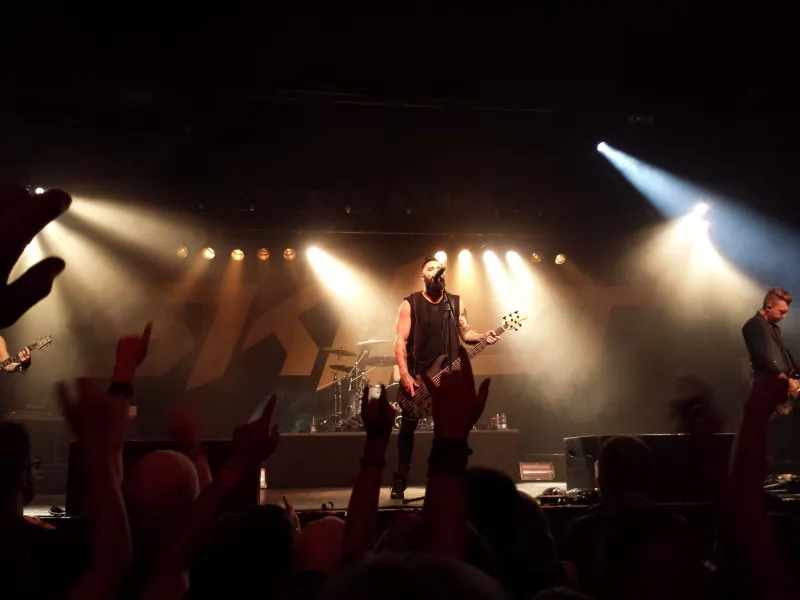
There's something we love about this kind of music at this site — the idea that a song can announce its own villainy before a single word gets sung. That a guitarist can step to the front of the stage, play four bars, and make an entire room feel like something's about to go sideways in the best possible way.
The riff is the villain's entrance. And when it's done right, you never forget the moment the lights changed.