Bad Guys, Big Riffs: Why Rock's Most Iconic Villains Changed Everything
Bad Guys, Big Riffs: Why Rock's Most Iconic Villains Changed Everything
There's something about a villain that just hits different when the amps are cranked to eleven.
Rock 'n' roll has never really been about playing it safe — and the genre's most enduring legacy isn't built on polished pop smiles or corporate-approved messages. It's built on characters who made parents nervous, preachers angry, and fans absolutely rabid with devotion. The villain archetype isn't a side note in rock history. It's practically the whole story.
Here at Vincent Vincent & The Villains, we know a thing or two about leaning into that darker edge. So let's dig into why rock's baddest personas didn't just entertain — they genuinely reshaped what the genre could be.
The Theatrical Menace That Started It All
Before shock rock was even a phrase, Alice Cooper was already sawing off baby doll heads on stage in Detroit. In the early '70s, when most bands were still chasing the Summer of Love's fading warmth, Cooper and his crew showed up with guillotines, fake blood, and a genuine theatrical menace that nobody in mainstream America knew how to process.
And it worked. Albums like Billion Dollar Babies and Welcome to My Nightmare didn't just sell — they created a template. Cooper understood something fundamental: the villain gives the audience permission to feel things they'd normally suppress. Fear. Transgression. The delicious thrill of rooting for someone who probably shouldn't be rooted for.
That's not a cheap trick. That's storytelling at its most primal.
When the Costume Becomes the Concept
One of the things that separates rock's great villain personas from simple shock value is the commitment to a full artistic concept. David Bowie's Ziggy Stardust wasn't just a costume — it was an alien outsider narrative that let Bowie explore sexuality, identity, and alienation in ways that straight-faced rock couldn't touch. The villain (or at least the outcast) became the vehicle for genuine philosophical exploration.
Same deal with KISS. Gene Simmons' Demon character is often dismissed as cartoonish, but there's a reason it endured for five decades. The Demon gave KISS a mythology, a visual shorthand for danger and excess that translated instantly whether you were a kid in rural Kansas or a teenager in downtown Chicago.
The costume becomes the concept. The character becomes the cause.
Marilyn Manson and the Culture War Years
If Alice Cooper opened the door, Marilyn Manson blew it clean off the hinges. Through the mid-to-late '90s, Manson operated as rock's most effective provocateur — not just aesthetically, but intellectually. He had the receipts. He'd read Nietzsche. He could go on CNN and dismantle his critics with a calm, articulate precision that made the pearl-clutching look even more absurd.
Songs like "The Beautiful People" and "Antichrist Superstar" weren't just loud — they were angry in a structured, purposeful way. Manson weaponized the villain persona to critique American consumerism, religious hypocrisy, and media manipulation. He made the bad guy into a mirror, and a lot of people didn't like what they saw reflected back at them.
That's the real power move. The villain who makes you think is way scarier than the villain who just makes you flinch.
Why Audiences Root for the Bad Guy
So why do we love these characters so much? Why does a packed club crowd lose its collective mind when a band leans into the dark side?
Part of it is pure catharsis. Everyday life in America — the commute, the bills, the constant low-grade anxiety of just existing — doesn't leave a lot of room for transgression. Rock's villain figures act out the stuff we'd never actually do. They're the id with a Marshall stack.
But there's also something deeper at work. The best rock villains are almost always honest in a way that feels radical. They don't pretend the world is fine. They don't smooth over the rough edges. They show up in full theatrical regalia and say: this is broken, this is dark, and we're going to scream about it together for ninety minutes.
That's a genuine service. That's community.
The DIY Villain and the Underground Scene
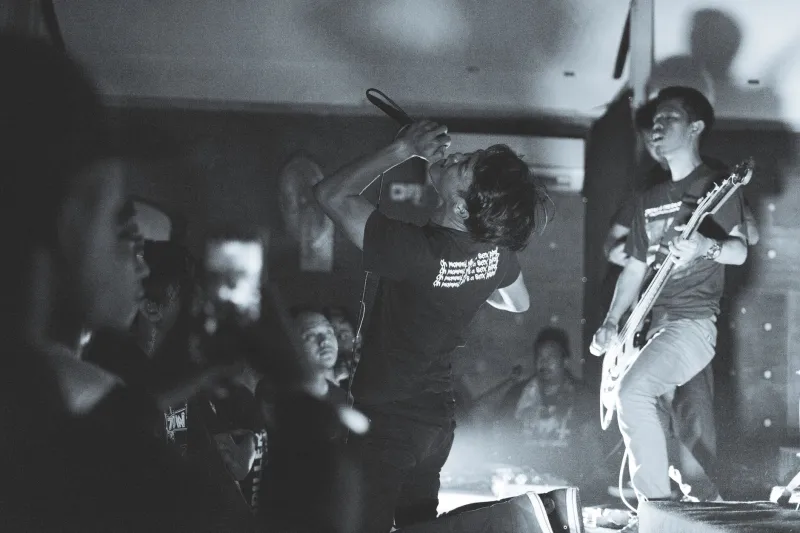
It's worth noting that the villain archetype isn't exclusive to arena-filling megastars. Across America's club circuit — from dive bars in Austin to basement shows in Brooklyn — independent bands have been doing their own version of this for decades. Without major label budgets or MTV exposure, they've built villain personas through sheer creative force and relentless gigging.
These are the acts that keep the tradition alive. The ones who show up in a beat-up van, set up their own gear, and then proceed to melt faces in front of a crowd of two hundred people who will never forget that night.
That grassroots villainy — scrappy, authentic, and completely uncompromising — is honestly where the genre's heartbeat lives right now.
What the Villain Teaches Us About Rock's Future
Here's the thing about villain rock: it has never really gone out of style, even when the mainstream tries to declare it dead. Every few years, a new act emerges who understands that the darkness is a creative resource, not a liability. That discomfort is a doorway, not a wall.
The genre needs its bad guys. It needs characters who push against whatever the current acceptable version of reality happens to be. Rock without a villainous edge is just... furniture music. Background noise for a life lived safely and without much imagination.
At Vincent Vincent & The Villains, that's basically our whole thesis. The riffs are louder when the stakes are higher. The crowd goes wilder when there's something genuinely dangerous in the room — even if that danger is mostly theatrical, mostly performance, and entirely in service of a great song.
Root for the villain. The riffs are better on this side anyway.