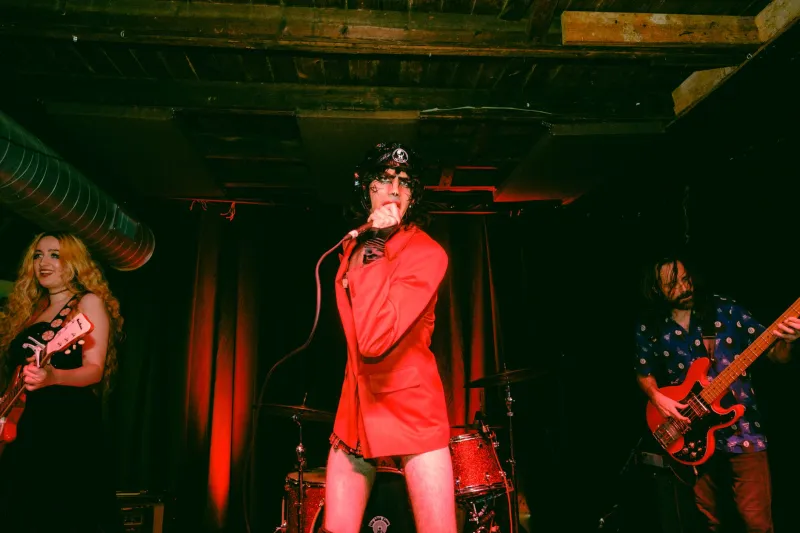
Where Did All the Swagger Go? Rock's Confidence Problem Is Killing the Genre

Let's be honest about something that nobody in the music press seems willing to say plainly: modern rock has a confidence problem. Not a songwriting problem, not a production problem, not a streaming problem. A confidence problem. The unshakeable, room-dominating, I-was-born-to-be-exactly-this kind of self-assurance that once defined the genre has largely evaporated, replaced by a carefully managed performance of approachability that feels about as dangerous as a wellness podcast.
And American rock fans — the ones who still show up, still buy tickets, still care — are starting to feel the absence like a missing tooth.
What Swagger Actually Was
Before we diagnose the problem, let's be clear about what we're actually talking about. Swagger in rock was never just arrogance for its own sake. It wasn't the empty posturing of someone who had nothing to back it up. At its best, it was a specific kind of conviction — the unironic belief that what you were doing mattered, that the music you were making was important, and that you had every right to demand the world's attention.
Freddie Mercury didn't walk to the front of a stage and command 70,000 people by being relatable. He did it by being extraordinary, and by making absolutely no apologies for that fact. Iggy Pop didn't crawl across broken glass to seem humble. Robert Plant didn't treat a sold-out arena like a casual hangout. These were people who understood that the transaction between a rock performer and an audience requires someone to take the stage with total authority — and that authority starts with believing, completely and without reservation, that you deserve to be there.
That's what's gone. And its absence is felt.
The Humility Trap
Somewhere in the last fifteen years, a cultural shift occurred that made unironic confidence feel almost embarrassing in public-facing creative spaces. The language of vulnerability and authenticity — which, to be clear, has genuine value — got weaponized into a kind of mandatory self-deprecation. Artists began competing to seem the most ordinary, the most relatable, the most just-like-you.
This works fine for certain genres. Pop thrives on parasocial intimacy. Country has always traded on the everyman narrative. But rock — actual rock, the kind with volume and edge and the faint suggestion that something could go wrong at any moment — needs its performers to be something other than your neighbor.
The irony is that the humility-branding trend was supposed to make artists more authentic. Instead, it made them less. Because there's nothing authentic about a performer who genuinely believes they're exceptional pretending to be average. That's its own kind of lie, and audiences can smell it.
The American Appetite for Dominance
Here's what makes this particularly strange in the American context: US audiences have never stopped wanting dominant, uncompromising rock figures. The hunger is clearly there. Every time an artist shows up with genuine conviction and refuses to hedge it — every time someone takes a stage like they own it and makes no apologies — the response is immediate and intense.
Look at the cult status that still surrounds performers like Jack White, who has made a career out of refusing to be casual about anything. Look at the reverence for Dave Grohl, who plays with a kind of joy and conviction that reads as almost old-fashioned now but connects with audiences in a way that carefully managed vulnerability never does. These are people who still act like rock music is the most important thing happening on the planet. And fans respond to that belief with a ferocity that no amount of carefully crafted relatability can match.
The demand is there. The supply has dried up.
What Killed the Swagger
The causes are multiple and boring, which is part of the problem. Social media created an environment where artists are perpetually visible and perpetually accountable in ways that make the grand gesture, the outrageous claim, the unapologetic declaration of greatness feel genuinely risky. One bad take, one moment of perceived arrogance, and the pile-on begins.
So artists learned to pre-emptively shrink. To qualify. To present themselves as works-in-progress, as humble students of the craft, as people who are just grateful to be here. And individually, each of those choices is understandable. Collectively, they've produced a generation of rock performers who feel like they're perpetually apologizing for taking up space.
The music industry's obsession with demographic data and playlist placement didn't help. When every creative decision gets filtered through an algorithm that rewards familiarity and punishes edges, the natural result is music — and artists — with the edges filed off.
The Villain Proposition
Here's the argument, stated plainly: the path back for rock runs through the villain archetype, not the everyman one. It runs through performers who are willing to be too much — too loud, too confident, too convinced of their own importance — rather than performers who are carefully calibrated to seem like just enough.
The villain in rock mythology was never actually evil. The villain was the one who refused to ask permission. Who walked into the room without waiting to be invited. Who made music that demanded a reaction rather than courting one. That figure — the one who picks up the guitar like it's a weapon and plays like the whole world is watching because, frankly, it should be — is exactly what American rock audiences are waiting for.
They've been patient. They've sat through a decade of careful, qualified, please-don't-be-offended rock music. They're still showing up to shows. They're still buying records. They're still looking for something that hits like a declaration rather than a suggestion.
Somebody just needs to have the nerve to give it to them.