Ten Guitar Tones So Ugly They Sound Like a Threat
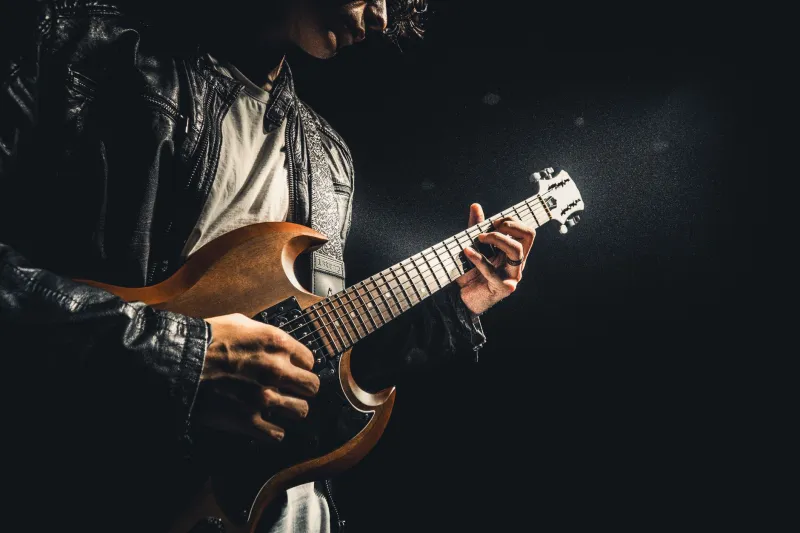
A great guitar tone doesn't have to be pretty. In fact, some of the most iconic sounds in rock history are specifically, deliberately, almost aggressively ugly — chosen not despite their abrasiveness but because of it. These are the tones that made producers uncomfortable, that made other guitarists wonder what on earth was wrong with the amp, and that made listeners feel a low-grade sense of dread they couldn't quite explain.
This is a celebration of that ugliness. A love letter to the sounds that function less like music and more like a warning.
1. Tony Iommi — Black Sabbath
You start here. You always start here. Iommi lost the tips of two fingers on his fretting hand in a factory accident, which forced him to detune his guitar and develop a lighter touch that paradoxically made his riffs feel heavier. The resulting tone — thick, murky, saturated with a low-mid sludge that sits in your chest rather than your ears — essentially invented an entire genre. It doesn't sound like rock guitar. It sounds like the building is settling.
2. Billy Gibbons — ZZ Top (Eliminator era)
Gibbons is proof that a tone can be both immaculate and menacing. The "Eliminator" sound — routed through a Tube Screamer into a cranked Marshall, often with a tiny piece of fur on the pick — has a furred, almost animal quality that shouldn't work as well as it does. It sounds expensive and threatening simultaneously, like a very well-dressed person who might still rob you.
3. Jack White — The White Stripes
White built his entire aesthetic around limitation, and his guitar tone reflects that obsession. Cheap guitars, beaten-up amps, a signal chain that sounds like it's held together with electrical tape and spite. The result is a tone with a ragged, almost wounded quality — like the sound itself is in pain. On tracks like "Icky Thump," the guitar doesn't just play notes; it snarls them.
4. Link Wray — "Rumble"
The original criminal guitar tone. Wray literally stabbed holes in his speaker cone with a pencil to get the distorted, torn-fabric sound on "Rumble" — a 1958 instrumental so menacing it was banned by radio stations despite having no lyrics whatsoever. Let that sink in. A song with no words was considered too dangerous to broadcast. The tone alone was enough to get it pulled.
5. Kurt Cobain — Nirvana
Cobain ran cheap Japanese guitars through a Big Muff fuzz pedal into Mesa Boogie amps, and the combination produced something that sounded less like a guitar and more like a malfunctioning industrial machine trying to communicate distress. The tone on In Utero in particular has a corroded, almost corroding quality — like rust you can hear. It's genuinely uncomfortable in the best possible way.
6. David Grohl — Foo Fighters (In Your Honor and beyond)
Grohl doesn't get enough credit for how genuinely hostile his guitar tone can be. When he wants to, he can conjure a wall of distortion that has a physical, oppressive weight to it — not sludgy like Sabbath, but dense and relentless, like being pushed backward by something you can't see. It's the sound of a nice person who has finally had enough.
7. Dimebag Darrell — Pantera
The "Brown Sound" — Dimebag's signature tone achieved through a Randall solid-state amp (a choice that horrified tube purists) and a Furman parametric EQ — has a midrange bite that is almost physically uncomfortable at volume. It cuts through a mix like it has something to prove. Every note sounds like a threat that's been carefully calculated to land.
8. Josh Homme — Queens of the Stone Age
Homme's tone is interesting because it sounds deceptively smooth at low volumes and then reveals its true character when it gets loud. There's a controlled menace to it — a sense of something being held back, barely. On tracks like "No One Knows" or "Go with the Flow," the guitar sounds like it's being polite, but only just. The underlying aggression is always audible, right at the edge.
9. Tom Morello — Rage Against the Machine
Morello's approach to guitar tone is almost scientific in its hostility. Through a combination of a kill switch, a whammy pedal, and a methodical willingness to make his guitar sound like literally anything except a guitar, he created a sonic vocabulary that felt genuinely alien on first listen. Certain passages on Evil Empire sound less like a rock record and more like a transmission from somewhere that doesn't want to be found.
10. The Edge — U2 (Achtung Baby era)
This one might surprise you, but hear us out. The Edge's tone on Achtung Baby — processed through multiple delays, run through industrial effects, deliberately de-prettified from the clean chime of the Joshua Tree years — has a fractured, almost paranoid quality. It sounds like something beautiful that got broken and decided to be threatening instead. "Zoo Station" opens with a guitar that sounds less like music and more like a machine that's deciding whether to cooperate.
Why Tone Is the First Impression
The thing all of these sounds share is intentionality. None of these guitarists stumbled into their tones accidentally. Each one made deliberate choices — about gear, about technique, about how much ugliness they were willing to embrace — that resulted in a sound that communicated something before a single note was even played.
Tone is the first impression. It's the thing that tells you, before the riff, before the melody, before the lyrics, what kind of world you've just entered. And the guitarists on this list understood that a threatening tone isn't a failure of craft — it's the craft itself, deployed with maximum precision.
The best guitar sounds don't just sit in a mix. They occupy space. They make demands. And the best of them, the ones on this list, sound exactly like what they are: instruments in the hands of people who decided that comfort was someone else's problem.