Standing Slightly Left of Center: 10 Rock Sidemen Who Hijacked the Room Without Asking
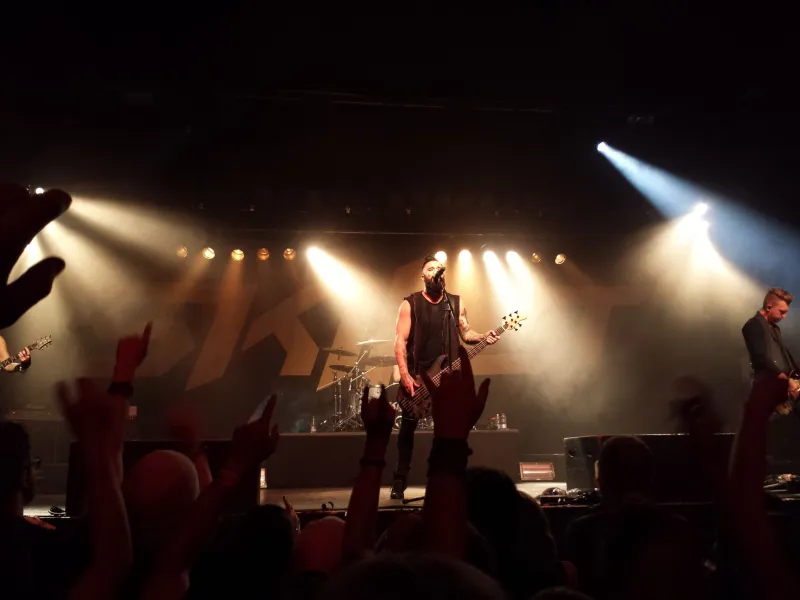
There's a particular kind of rock 'n' roll story that nobody really plans for. A band needs a rhythm guitarist, or a second vocalist, or maybe just someone to cover the keyboard parts on the road. They make a call, somebody shows up to rehearsal, and everything seems fine — until the first show, when half the crowd is craning their necks toward the person who wasn't supposed to be the focal point. It happens more than the industry likes to admit. And it's almost never malicious. Some musicians just carry a gravitational pull that no billing order, no lighting rig placement, and no carefully negotiated contract rider can suppress.
This is a list about those people. The ones standing slightly to the left. The ones who walked into somebody else's band and somehow walked out as the most compelling figure in the room.
1. Mick Taylor — The Rolling Stones (1969–1974)
Brian Jones was dead. The Stones needed a guitarist, and they got one. What they maybe didn't fully anticipate was that Mick Taylor — twenty years old, liquid-fingered, almost unnervingly calm — would redefine what the band was capable of. His work on Exile on Main St. and Sticky Fingers is the kind of playing that makes you forget there are other people on stage. He left in 1974, quietly, and the Stones never quite sounded the same again.
2. Nils Lofgren — Bruce Springsteen's E Street Band
Clarence Clemons was the heart. Springsteen was the myth. But Nils Lofgren, a decorated solo artist who joined the E Street Band in 1984, brought something quietly electrifying to every show — including the kind of guitar theatrics that routinely caused jaws to drop mid-set. His Born in the USA tour guitar solo became the sort of moment fans would describe to their kids. He wasn't the star. He was just the most technically stunning thing happening on that stage on any given night.
3. John Paul Jones — Led Zeppelin
Jimmy Page got the mystique. Robert Plant got the screaming fans. John Bonham got the mythology. John Paul Jones got the thankless job of being the most musically sophisticated person in one of the greatest rock bands ever assembled — and he did it without complaint, without drama, and with a bass and keyboard approach so foundational that the whole thing would have collapsed without him. The quiet villain. The most dangerous kind.
4. Ron Wood — Faces / Rolling Stones
Rod Stewart was supposed to be the Faces. And he was, technically. But Ron Wood had a way of making himself impossible to ignore — loose, grinning, playing with a swagger that felt like it cost nothing and meant everything. When he eventually joined the Stones as a touring member (and later full-time), nobody was surprised. He had always been the guy you couldn't stop watching.
5. Mike Campbell — Tom Petty and the Heartbreakers
Tom Petty was one of America's great rock voices. Mike Campbell was the reason the songs sounded like they did. As the lead guitarist and primary collaborator behind the Heartbreakers' catalog, Campbell wrote riffs and solos that defined the band's identity as much as Petty's vocals did. He never sought the spotlight. It found him anyway, every time he stepped to the mic for a solo.
6. Izzy Stradlin — Guns N' Roses
Axl Rose was the spectacle. Slash was the icon. Izzy Stradlin was the rhythm guitarist who quietly wrote or co-wrote most of Appetite for Destruction and held the whole thing together sonically. He left in 1991, and something essential left with him — a looseness, a swagger, a sense that the songs were being played by people who actually felt them. His absence is most audible in everything that came after.
7. Bernie Worrell — Parliament-Funkadelic and Talking Heads
Okay, this one crosses genre lines a little, but rock has always been porous, and Worrell's keyboard work with Talking Heads on Stop Making Sense is the kind of contribution that rewrites what a sideman can be. He was one of the architects of funk. He showed up to David Byrne's art-rock project and made it feel like a religious experience. Nobody in that room was supposed to outshine the concept. Worrell didn't care.
8. Earl Slick — David Bowie
Bowie cycled through guitarists the way some artists cycle through producers. Earl Slick — who played on Diamond Dogs, Young Americans, and later Let's Dance — kept coming back because he had something that was hard to manufacture: a tone and a presence that matched Bowie's theatrical energy without trying to compete with it. He knew exactly how close to the flame to stand. That's its own kind of genius.
9. Robbie Robertson — Bob Dylan's Band (The Hawks)
Before The Band was The Band, they were Bob Dylan's backing musicians — hired to help him go electric and survive the fallout. Robbie Robertson walked into that tour as a sideman and left it as one of the most respected guitarists and songwriters in American rock history. The Basement Tapes. The Last Waltz. None of it was supposed to be his story. All of it became it.
10. Kim Deal — The Pixies
Frank Black built the Pixies. Kim Deal made them. Her bass playing was the counterweight to Black Francis's controlled chaos, and her backing vocals — particularly on Gigantic, which she wrote — were the moments audiences held onto longest. She was a sideperson in billing only. In the room, in the mix, and in the memory of anyone who saw them live, she was indispensable and unforgettable.
The Cautionary Part
Here's the thing nobody says out loud: when a sideman steals the stage, it's not always comfortable. Bands fracture over it. Egos curdle. The person in the center starts noticing where the cameras are pointing. Sometimes the sideman leaves — by choice or otherwise — and takes a crucial piece of the band's identity with them. Taylor leaving the Stones. Stradlin leaving Guns N' Roses. Deal's increasingly complicated relationship with the Pixies. The spotlight doesn't share well.
But the other side of that story is equally true. Some of the most enduring musical legacies belong to people who were never supposed to be the focal point. They just couldn't help it. The stage has a way of sorting out who belongs at the center, regardless of what the contract says.
The Lesson
If you're building a band — or booking one, or watching one from the third row — pay attention to whoever's standing slightly to the left. Not because they're trying to take over. Usually, they're not. But talent has a gravitational pull that stage positioning can't fully contain. The most dangerous person in the room is often the one who doesn't know they're dangerous.
And that, right there, is a very Vincent Vincent & The Villains kind of story.