10 Rules the Baddest Bands in Rock Never Break — And Why That's Exactly the Point
Everybody wants to be the villain until it costs them something. Then you find out who's actually committed.
Rock has always had its share of acts who look dangerous — the leather, the scowl, the carefully cultivated reputation for being difficult. But look closer and most of them are playing a character. The real ones? They're operating by a different code entirely. Not a written one, not something they sat down and decided — but a set of principles so consistent that you can map them across careers, across decades, across the kind of scrutiny that exposes poseurs every single time.
Here are the ten rules that rock's most genuinely dangerous bands actually live by.
1. Never Apologize for the Music
Not to the label. Not to the press. Not to the fans who wanted something more accessible. The music is what it is, and the bands that last are the ones who treat artistic compromise as a line they simply don't cross. This isn't arrogance — it's a form of respect. For themselves, and ultimately for the audience, who can always tell when they're being given a watered-down version of something.
2. Make the Discomfort the Point
The best villainous acts in rock don't accidentally make their audiences uncomfortable. They do it on purpose, with intention, because they understand that comfort is the enemy of anything genuinely affecting. The bands who endure are the ones willing to put something in the room that doesn't quite fit, that doesn't resolve neatly, that leaves you sitting with something unresolved after the show ends.
3. Keep the Inner Circle Small
The most dangerous bands in rock are notoriously selective about who gets close. This isn't paranoia — it's operational discipline. The more voices you let into the room, the more diluted the vision gets. The acts that maintain their edge over long careers are almost always the ones who've figured out who they actually trust and built everything around that core.
4. Refuse the Obvious Move
When the smart play is obvious, make a different one. This sounds like self-sabotage, and sometimes it is. But the bands that built real mythology did it by zigging when the industry expected a zag — turning down the opening slot on the stadium tour, releasing the weird record when everyone wanted the accessible one, walking away from the deal that would have made them comfortable but cost them their soul. The obvious move is usually someone else's move.
5. Let the Reputation Do the Work
A band that has to tell you they're dangerous isn't. The acts with genuine reputations don't manage them — they simply behave consistently, and the reputation builds itself. There's something almost passive about it, paradoxically. The bands that announce their own edginess are usually compensating. The ones that actually have it are busy doing something else.
6. Own the Criticism
Every genuinely dangerous rock act has been called self-indulgent, inaccessible, difficult, or worse. The ones who last don't defend themselves against these charges — they absorb them. Sometimes they lean into them. Because the alternative is modifying your work to satisfy critics, and once you start doing that, you've already lost the thing that made the criticism worth having in the first place.
7. Never Fake the Struggle
This one's non-negotiable. Fans who are deeply invested in a band's identity can smell manufactured hardship from a mile away. The acts with authentic darkness got it honestly — they lived something, lost something, survived something. And they talk about it without dressing it up or making it prettier than it was. The struggle has to be real, or the whole thing falls apart.
8. Play the Long Game
The most dangerous bands in rock are not optimizing for this quarter, this album cycle, or this press cycle. They're building something that's supposed to outlast the moment. That means making decisions that look strange or even counterproductive in the short term but make complete sense over a ten- or twenty-year arc. Patience, in this world, is one of the most radical things you can have.
9. Treat the Live Show as Sacred
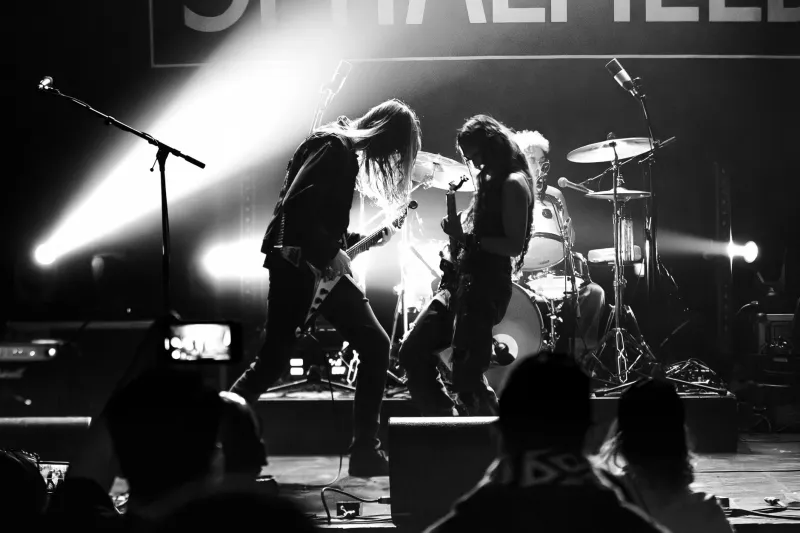
You can fake a lot of things in the studio. You can't fake a live show. The bands that hold genuine authority with their audiences are the ones who deliver every single time the lights go down — not because they're polished, but because they're present. Fully committed. Willing to blow the whole thing up if that's what the room needs. The live show is where the code gets tested, and the bands that live by it don't cut corners.
10. Never Mistake Popularity for Validation
This might be the most important rule of all. The bands who built real legacies — the ones still talked about decades after their commercial moment passed — are the ones who understood that a packed arena and genuine artistic authority are not the same thing. They pursued the latter. Sometimes the former followed. Sometimes it didn't. But they never confused the two, and they never let the absence of one make them doubt the presence of the other.
The villains' code isn't glamorous. It's not even particularly fun, a lot of the time. It costs things — opportunities, comfort, the easy path. But it's also what separates the acts that matter from the ones that merely trend. And in rock 'n' roll, that difference is everything.